
|
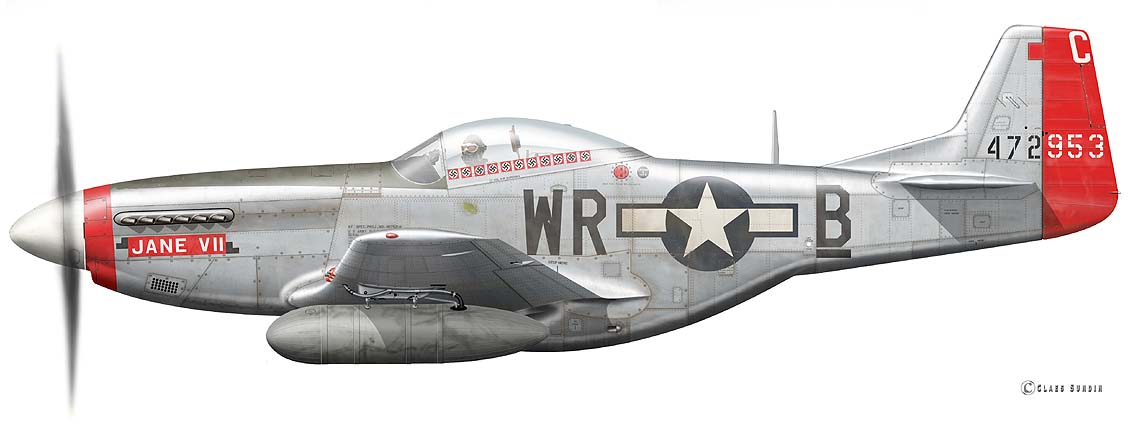
Marshall was born on November 9, 1918, in Royse City, Texas. Before becoming a legendary World War II fighter pilot and ace, Lt. Col. Bert Wilder Marshall, Jr. was a highly celebrated Texas sports icon. Attending Royse City High School in the mid-1930s, Marshall became one of the greatest high school athletes in Texas history, playing quarterback and led his team with an aggressive, highly physical style. Later he was named a three-time All-State Quarterback. For his high school achievements, he was later inducted into the Texas High School Football Hall of Fame in 1971. Marshall took his talents to Vanderbilt University in Nashville, Tennessee, where he played as a star tailback. He excelled on the national stage, earning Collier's Honorable Mention All-America honors for his dominant athletic performance. Because of his exceptional hand-eye coordination and natural leadership, he initially spent a long stint stateside as a pilot instructor. Due to this training assignment, he did not actually arrive in England for active combat duty until early June 1944, making his very first combat mission on 6 June 1944. His aggressive nature on the football field translated perfectly into the cockpit, where he became one of the 355th Fighter Group's fastest-scoring aces While piloting his P-51 B, Major Marshall was involved in one of the most famous and daring rescue missions on 18 August 1944, Major Marshall was shot down over occupied France. His wingman, Lieutenant Royce Priest, defied orders, landed his own Mustang in a French wheat field, and taxied toward Marshall while under fire from advancing German infantry. Marshall squeezed into the cramped single-seat cockpit behind Priest. Priest successfully took off from the rough field and flew them both safely back to England. He would on 31 March 1945, being hit by German flak, however Marshall managed to fly it for over two hours back to England to perform a flawless belly landing. Lt. Col. Bert W. Marshall, Jr. was then given a brand-new replacement fighter, which he christened "JANE VII". This Mustang was to be his the final combat aircraft flown by during World War II. Jane VII did not survive into the modern era. After the war ended, it remained in Europe as part of the occupational forces. On 5 September 1946, the aircraft suffered a fatal crash roughly 10 miles south of Regensburg, West Germany, resulting in a complete write-off. Lt. Col. Bert W. Marshall, Jr. was officially credited with 7 confirmed aerial victories during World War II, making him a designated Fighter Ace. He also achieved 4 ground victories, for a combined wartime total of 11 destroyed enemy aircraft. He would file his first on D-Day by shooting down a German Junkers Ju 87 "Stuka" dive-bomber over France. Marshall became an Ace during July August 1944 period. He racked up further aerial victories through July, officially reaching "Ace" status on 6 August 1944, just two months after his first combat flight. In April 1945 during
"The Husum Ground Sweep," flying his "Jane VI",
Marshall participated in a legendary strafing raid against this
German airfield. During this single high-speed ground assault,
he personally destroyed two twin-engine aircraft, a Messerschmitt
Bf 109, and a Focke-Wulf Fw 190 on the ground, while damaging
two additional twin-engine planes. This profile is one of many newly made P-51 Mustangs made during the last three months, a lot more will follow soon. |
 |
 |
 |
 |
 |
 |